Key Takeaways
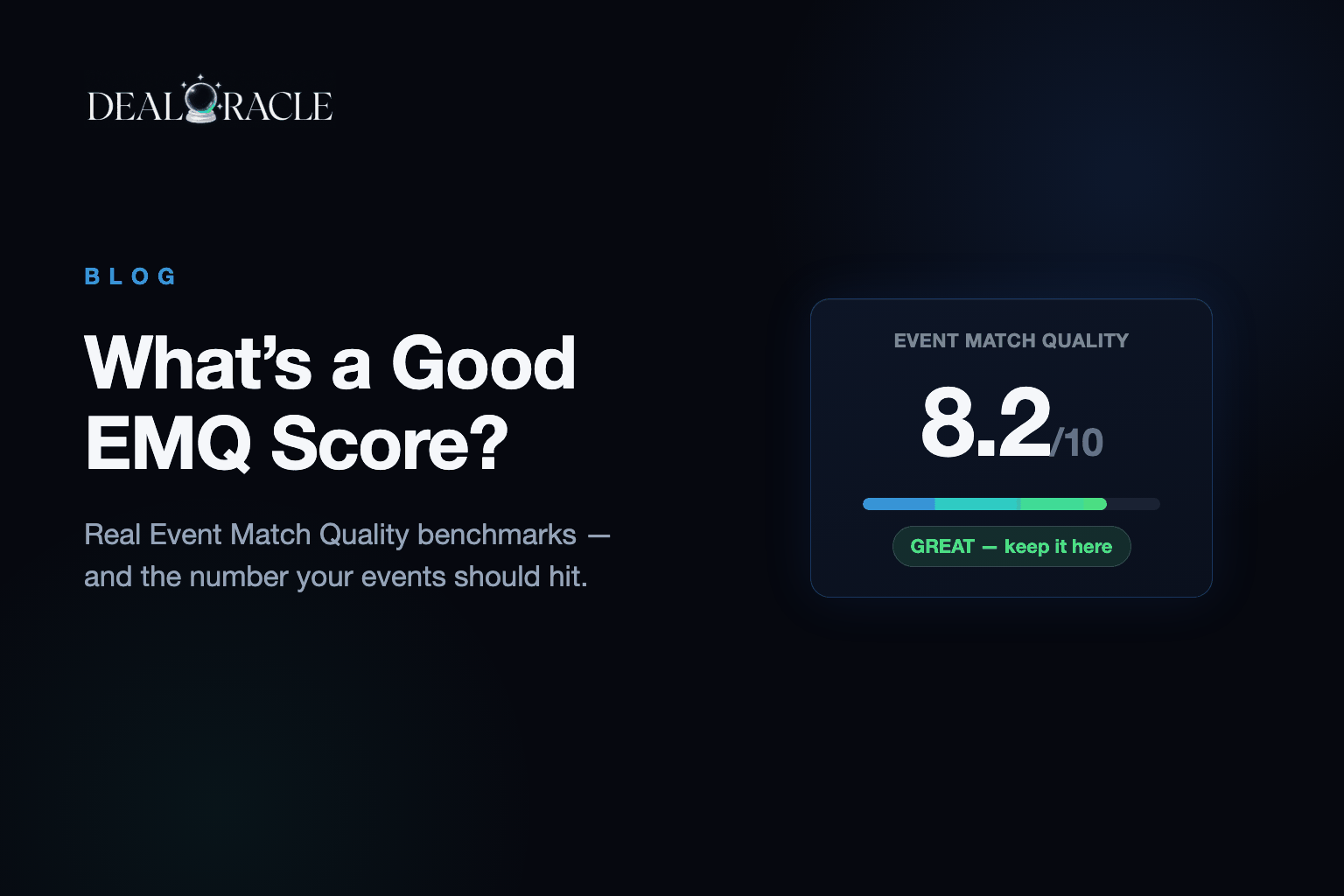
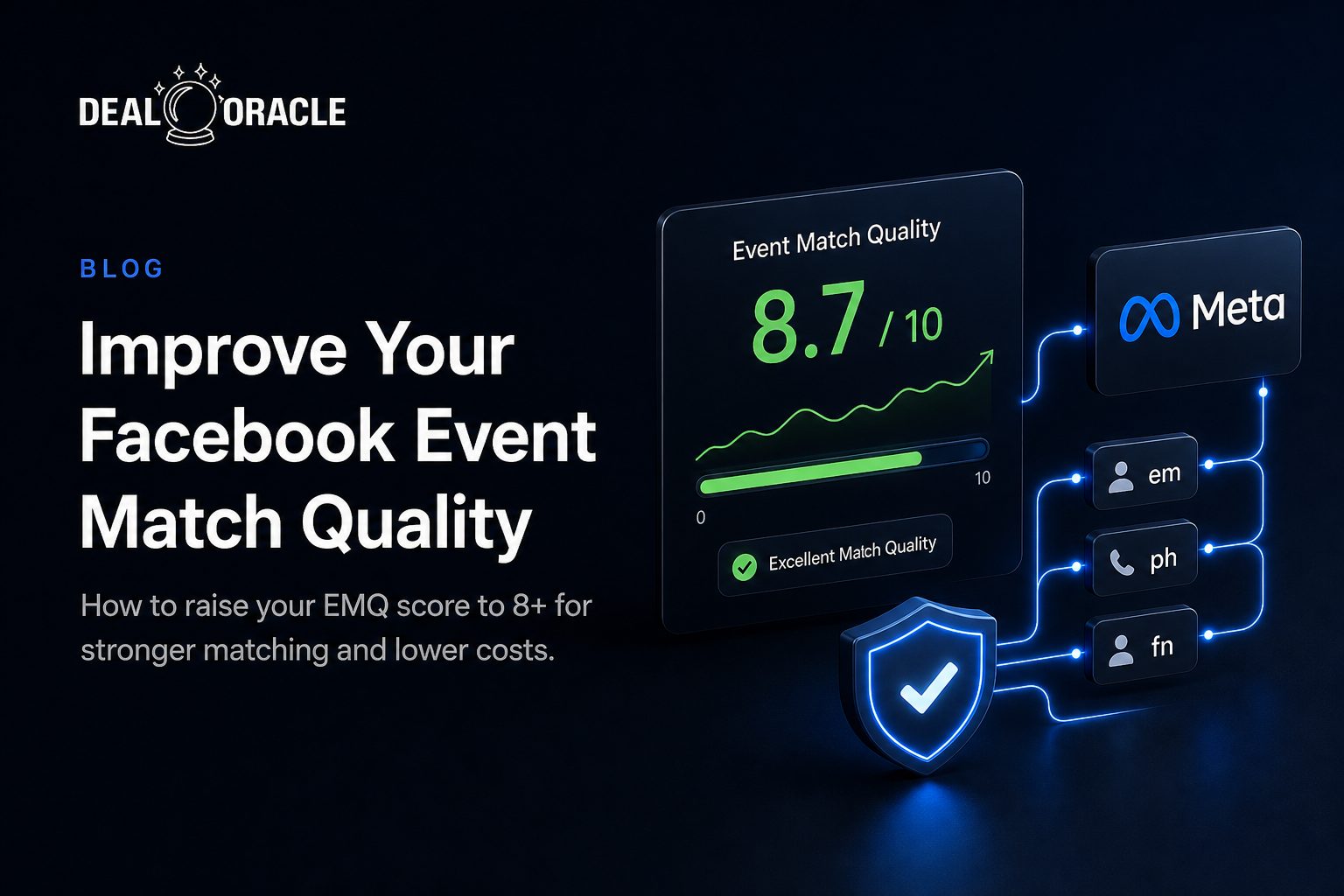
- Event Match Quality (EMQ) is a 0-10 score Meta assigns each CAPI event based on how well your customer identifiers match a real person. Below 4 is Poor, 4-5.9 is OK, 6.0+ is Good, and 8.0+ is Great. - The single biggest lever is identifier coverage: send hashed **email + phone + external_id** on every event. Email alone caps you around 5-6; adding phone is the largest single jump. - Recover **fbp** and **fbc** server-side and run the Pixel and CAPI together sharing one **event_id** so events deduplicate cleanly. Failed or mismatched dedup actively *hurts* EMQ. - Clean your form data at the source: require email and phone, normalize to E.164 phone and lowercased/trimmed email, and strip stray characters before hashing. - EMQ updates 24-48 hours after a change. Allow 3-5 days to stabilize and expect a durable lift within 1-2 weeks.
Your Facebook Conversions API is firing. Events are landing in Events Manager. But next to your Lead and Purchase events sits a number that quietly decides how well your ads perform: Event Match Quality. If it reads 4.8 when it could read 8.5, you are leaving conversions, lookalike accuracy, and ROAS on the table, and most advertisers never touch it.
This guide walks through exactly what EMQ is, why yours is probably stuck in the 4-6 range, and the specific changes that move it to 8+.
The Problem
Event Match Quality is a 0 to 10 score Meta assigns to each event your dataset sends. It measures one thing: how confidently Meta can match the event to a real Facebook or Instagram user using the customer information you provide. The more, and the cleaner, the identifiers you send, the higher the score.
A low EMQ does not just look bad on a dashboard. It degrades the entire optimization engine behind your ads:
- Fewer matched conversions. Unmatched events can't be attributed, so your reported ROAS understates reality and the algorithm optimizes on a thinner signal.
- Weaker lookalikes and retargeting. Audiences built on poorly matched events are smaller and less accurate.
- Higher costs. When Meta can't confidently attribute results, it spends more to find the next conversion, driving up CPA.
Most advertisers sit between 4 and 6, sending a hashed email and little else. That's the difference between "the events arrive" and "the events actually teach the algorithm who converted."
Why It Happens
A low EMQ almost always comes down to one of four root causes:
- Thin identifier coverage. You're sending hashed email only. Email is a strong identifier, but on its own it typically caps EMQ around 5-6. Meta matches on a combination of fields, so each additional clean identifier raises confidence.
- Missing fbp and fbc. The
_fbpbrowser cookie and thefbcclick identifier (derived from thefbclidURL parameter) are among Meta's highest-value match signals. On server-side events they're frequently dropped because the server never sees the browser cookie, so they have to be explicitly captured and forwarded. - Broken deduplication. When your Pixel and CAPI both fire but use different
event_idvalues (or one side omits it), Meta can't recognize them as the same action. Failed or mismatched dedup doesn't just inflate counts, it actively lowers match quality because Meta sees conflicting, lower-confidence signals. - Dirty form data. Phone numbers without a country code, emails with capitalization or trailing spaces, and stray characters all break the hash comparison. A hash is exact:
+1 (415) 555-0199and4155550199produce completely different SHA-256 values, and only one will match.
Meta documents the scoring model and the parameters that feed it in its official references. See Meta's About Event Match Quality help article for how the score is calculated, and the Dataset Quality API docs for reading EMQ programmatically across your events.
This is closely related to the dedup problem we cover in the missing deduplication key guide, a broken dedup key and a low EMQ score very often show up together.
| EMQ Score | Band | What It Means | What To Do |
|---|---|---|---|
| 0.0-3.9 | Poor | Few or low-confidence identifiers; many events are effectively unmatched. | Audit immediately. You're likely sending email only or have broken hashing. Add phone + external_id and verify normalization. |
| 4.0-5.9 | OK | Usually hashed email alone with no phone, fbp, or fbc. | Add hashed phone (biggest single jump), recover fbp/fbc server-side, and confirm dedup is working. |
| 6.0-7.9 | Good | Solid coverage but missing one or two high-value parameters. | Layer in external_id, ensure fbc is captured on every click, and tighten data normalization. |
| 8.0-10.0 | Great | Strong, consistent identifier coverage with clean dedup. | Maintain. Monitor weekly and watch for regressions when forms or tracking change. |
How to Fix It
The path to 8+ is additive: each step layers another high-confidence identifier onto the event. Work through them in order.
1. Send hashed email, phone, and external_id on every event
This is the highest-impact change you can make. Email alone caps around 5-6; adding phone is the single biggest jump you'll see. Then add a stable external_id (your CRM contact ID, user ID, or lead ID) to give Meta a persistent anchor across events.
All personal identifiers must be SHA-256 hashed before they leave your server, never send raw email or phone. Send all three on every event, not just the first touch.
2. Normalize before you hash
A hash only matches if the input is byte-for-byte identical to what Meta normalizes on its side. Before hashing:
- Email: lowercase and trim whitespace (
[email protected]→[email protected]). - Phone: convert to E.164 with country code and strip spaces, dashes, and parentheses (
(415) 555-0199→+14155550199, hashed as14155550199per Meta's format). - Names, city, state, zip: lowercase, trim, and remove punctuation.
Make email and phone required fields on your forms so you're never hashing empty strings.
3. Recover fbp and fbc server-side
The _fbp cookie and the fbc value (built from the fbclid URL parameter, formatted as fb.1.<timestamp>.<fbclid>) are top-tier match signals. Capture _fbp from the browser and persist fbclid from the landing-page URL at the moment of the click, then forward both with the server-side event. If your server fires CAPI without these, you're discarding two of Meta's strongest identifiers.
4. Share one event_id across Pixel and CAPI
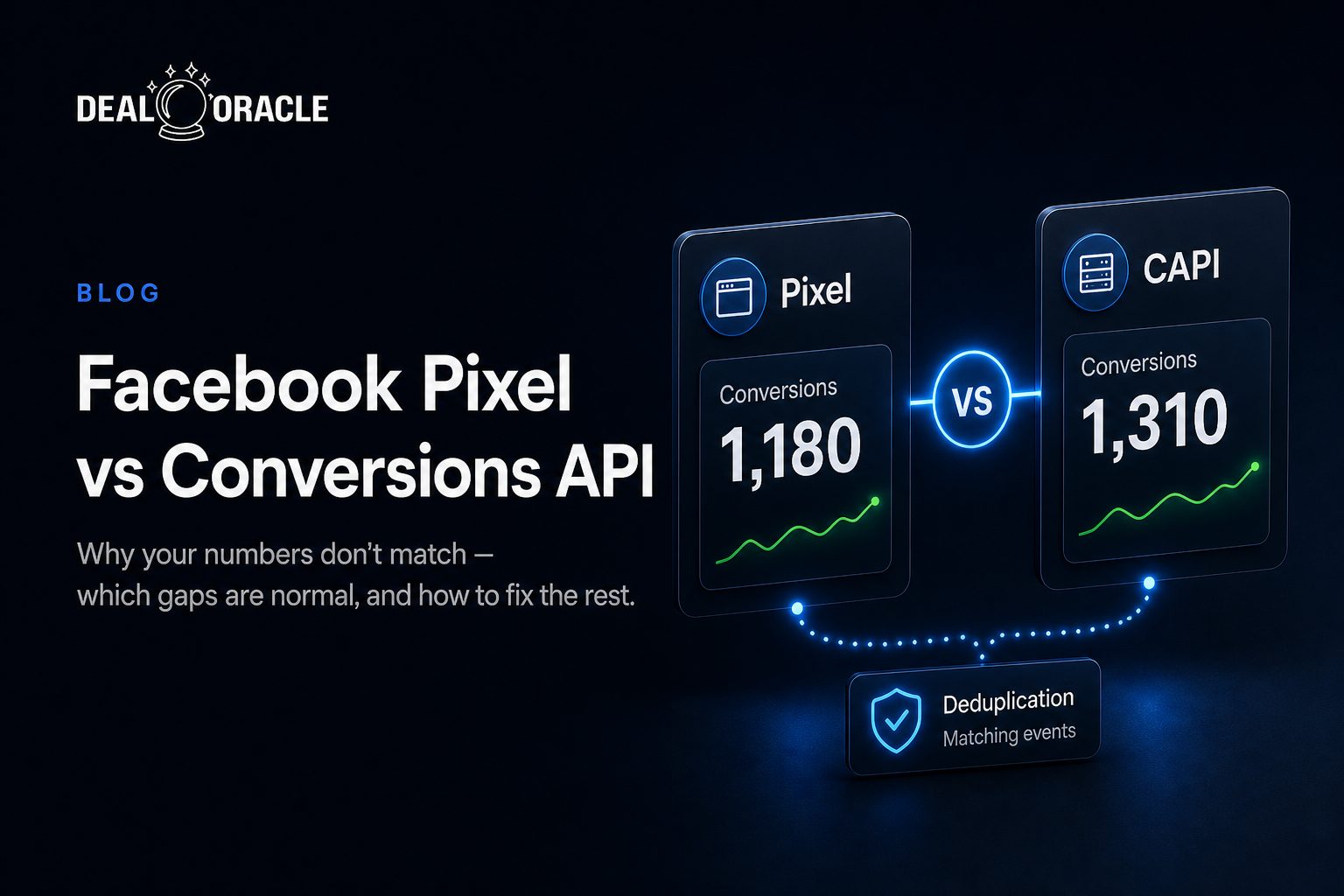
Run the browser Pixel and server-side CAPI together, and have both send the same event_id for the same user action. This lets Meta deduplicate cleanly and combine the browser-side and server-side identifiers into a single high-confidence match. Skipping the Pixel or mismatching the event_id leaves match value on the table, and broken dedup can pull your score down. For the full mechanics, see the missing deduplication key guide.
5. Verify, then wait
Use Events Manager → your dataset → the event detail view, or the Dataset Quality API, to confirm each parameter is being received. Then be patient: EMQ updates 24-48 hours after a change, takes 3-5 days to stabilize, and a durable lift typically lands within 1-2 weeks. Don't keep changing variables daily, you'll never know what moved the number.
| Parameter | Field | Match Value | Notes |
|---|---|---|---|
| em | High | Strong on its own but caps EMQ ~5-6. Lowercase + trim before hashing. | |
| Phone | ph | Very High | The single biggest jump after email. Must be E.164 with country code. |
| External ID | external_id | High | Stable CRM/user/lead ID. Persistent anchor across multiple events. |
| Click ID | fbc | Very High | From fbclid at click time. Recover server-side; frequently dropped. |
| Browser ID | fbp | High | The _fbp cookie. Capture from the browser and forward server-side. |
| Name / location | fn, ln, ct, st, zp | Medium | Useful additive signal. Normalize and hash; low cost to include. |
How DealOracle Handles This
Getting to 8+ by hand means wiring hashing into your forms, persisting fbclid and _fbp across page loads, generating matched event_ids on both the Pixel and the server, and keeping it all from silently breaking on the next site change. DealOracle does that automatically. It sends server-side events with SHA-256 hashed email, phone, and external_id on every event, recovers fbp and fbc from the original session, and generates shared event_ids so your Pixel and CAPI deduplicate perfectly, the exact ingredients of an 8+ score.
- Full identifier coverage, hashed email, phone, and external_id on every event, normalized correctly before hashing.
- fbp/fbc recovery, captures the browser cookie and
fbclidat click time and forwards them server-side. - Clean deduplication, one shared
event_idacross Pixel and CAPI, so dedup raises your score instead of breaking it. - No manual upkeep, normalization and hashing are handled for you, so a form change doesn't quietly tank your EMQ.
DealOracle sends server-side events with hashed PII, recovers fbc/fbp, and generates shared event_ids automatically, book a demo to see your EMQ climb.
Bottom Line
Event Match Quality is one of the highest-ROI numbers in your ad account, and it's almost entirely within your control. Send hashed email, phone, and external_id on every event; recover fbp and fbc server-side; share one event_id across Pixel and CAPI; and normalize your data before hashing. Make those changes, give it 1-2 weeks to stabilize, and a stuck 5 becomes a solid 8+.
If you're setting up server-side tracking from scratch, start with our beginner's guide to server-side tracking, clean identifier coverage is far easier to build in from day one than to retrofit later.